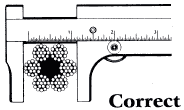
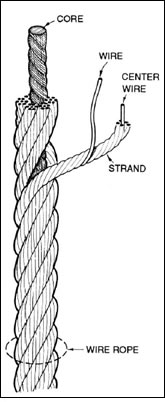
To ensure correct measurement rotate the vernier around the
rope diameter to ensure the correct size is obtained
| 1 |
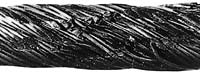
Mechanical
damage due to rope movement over sharp edge projection whilst
under load. |
|
 |
|
| 2 |
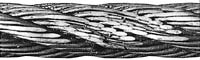
Localised
wear due to abrasion on supporting structure. |
|
 |
|
| 3 |
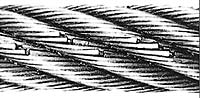
Narrow
path of wear resulting in fatigue fractures, caused by working in
a grossly oversize groove, or over small support rollers. |
|
 |
|
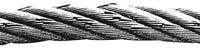
| 4 |
Two
parallel paths of broken wires indicative of bending through an
undersize groove in the sheave. |
|
 |
|
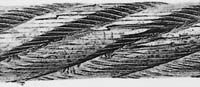
| 5 |
Severe
wear, associated with high tread pressure. |
|
 |
|
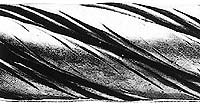
| 6 |
Severe
wear in Langs Lay, caused by abrasion. |
|
 |
|
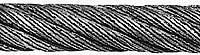
| 7 |
Severe
corrosion. |
|
 |
|
| 8 |
Internal
corrosion whilst external surface shows little evidence of
deterioration. |
|
 |
|
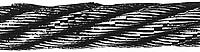
| 9 |
Typical
wire fractures as a result of bend fatigue. |
|
 |
|
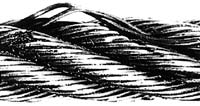
| 10 |
Wire
fractures at the strand, or core interface, as distinct from
‘crown’ fractures. |
|
 |
|
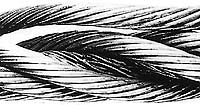
| 11 |
Break
up of IWRC resulting from high stress application. |
|
 |
|
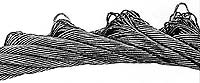
| 12 |
Looped
wires as a result of torsional imbalance and/or shock loading. |
|
 |
|
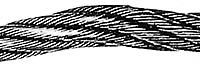
| 13 |
Typical
example of localised wear and deformation. |
|
 |
|
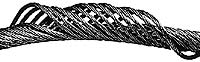
| 14 |
Multi
strand rope ‘bird caged’ due to tors ional imbalance. |
|
 |
|
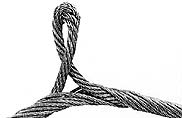
| 15 |
Protrusion
of rope centre resulting from build up of turn. |
|
 |
|
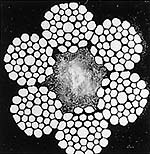
| 16 |
Substantial
wear and severe internal corrosion. |
|
 |
|